

Educational Needs:
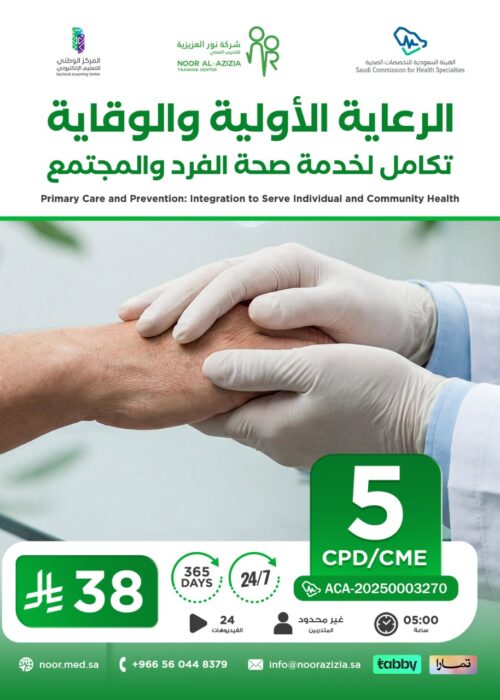
Objective: To provide participants with a comprehensive theoretical understanding of primary care and prevention concepts.
• Define primary healthcare, its importance, and the concept of prevention (primary, secondary, and tertiary prevention).
• Distinguish between primary care and specialized care.
• Understand the role of primary care in achieving public health goals.
• Explore the relationship between prevention, improved health outcomes, and cost reduction.
• Recognize the role of multidisciplinary care teams.
⸻
Behaviors:
Objective: To promote the professional and ethical attitudes and behaviors required for delivering effective preventive care.
• Commitment to the vision and values of comprehensive care.
• Positive engagement with health awareness initiatives.
• Willingness to contribute to community education and individual empowerment.
• Building positive relationships with patients and the community.
⸻
Skills:
Objective: To develop practical skills necessary for applying primary care and prevention concepts.
• Use of early detection tools and preventive assessment methods.
• Delivering health messages effectively and in a culturally sensitive manner.
• Developing integrated care plans targeting both individuals and the community.
• Managing chronic conditions within ongoing preventive care programs.
⸻
Detailed Objectives:
• Explain the concept of primary healthcare and its central role in the health system.
• Discuss the importance of various forms of prevention in reducing disease burden and improving quality of life.
• Identify the integrated relationship between primary care services and community prevention programs.
• Apply health education principles and preventive interventions in daily care practices.
• Develop individual and community care plans that combine prevention and treatment.
• Explore challenges and opportunities in delivering effective preventive care within the framework of primary care.
• Familiarize participants with the roles of multidisciplinary healthcare teams in supporting prevention and achieving integrated care.